> For the complete documentation index, see [llms.txt](https://help.cerby.com/llms.txt). Markdown versions of documentation pages are available by appending `.md` to page URLs; this page is available as [Markdown](https://help.cerby.com/setup-and-admin/business-hubs/connecting-your-apps/retrieve-the-business-id-from-your-app.md).
# Retrieve the business ID from your app
This article describes how to retrieve the Business ID required to connect your disconnected apps to Cerby.
When connecting an external app to Cerby for identity lifecycle management, you might be asked to provide a Business ID. This ID corresponds to the specific collaboration space of the seat-based or paid social app you want to connect, and Cerby uses to determine which collaboration space's data to interact with and the scope of the permissions granted to users.
Depending on the app, this identifier may appear under different names, including Account ID, Tenant ID, Manager ID, Organization ID, or Team ID.
Providing the correct Business ID is essential to ensure that Cerby accesses the intended target in your external app to start executing automation. Therefore, you can prevent mistakes when your organization connects multiple integrations for the same external app.
Commonly, you can find the ID using the following methods:
* [From the address bar](#from-the-address-bar)
* [From the user interface](#from-the-user-interface)
The following sections describe each method.
{% hint style="danger" %}
**IMPORTANT:** Each business hub handles Business IDs differently. The examples in this article are intended as general guidance. For app-specific articles and videos, visit the [Connecting business hubs for your apps](https://help.cerby.com/setup-and-admin/business-hubs/connecting-your-apps) and [Connecting business hubs for your paid social apps](https://help.cerby.com/setup-and-admin/business-hubs/connecting-your-paid-social-apps) collections in the Cerby Help Center.
{% endhint %}
***
## From the address bar
After you log in to your app, sometimes the ID is displayed in the address bar as part of the URL. Depending on the app, it can appear in the subdomain, path, or query parameters. The following are examples of how different external apps display the ID:
* [**Productboard**](/setup-and-admin/business-hubs/connecting-your-apps/connect-a-business-hub-for-productboard.md) : The workspace identifier appears as the subdomain. For example, **`cerby-poc`** in **`cerby-poc.productboard.com`**.
* [**Asana**](/setup-and-admin/business-hubs/connecting-your-apps/connect-a-business-hub-for-asana.md) : The workspace identifier is displayed in the path between the **`admin`** and **`insights`** directories. For example, **`1209392144075813`** in **`https://app.asana.com/admin/1209392144075813/insights`**.
* [**Built In**](/setup-and-admin/business-hubs/connecting-your-apps/connect-a-business-hub-for-built-in.md)**: The company identifier is included as a query parameter. For example,`0123` in`https://builtin.com/employer/company-admin?selectedCompanyId=0123`.**
***
## From the user interface
After logging in to your app, you can often find the ID by navigating to the settings or business information page. The ID is usually listed in the account details or organization information section. The following are examples of how different external apps display the ID:
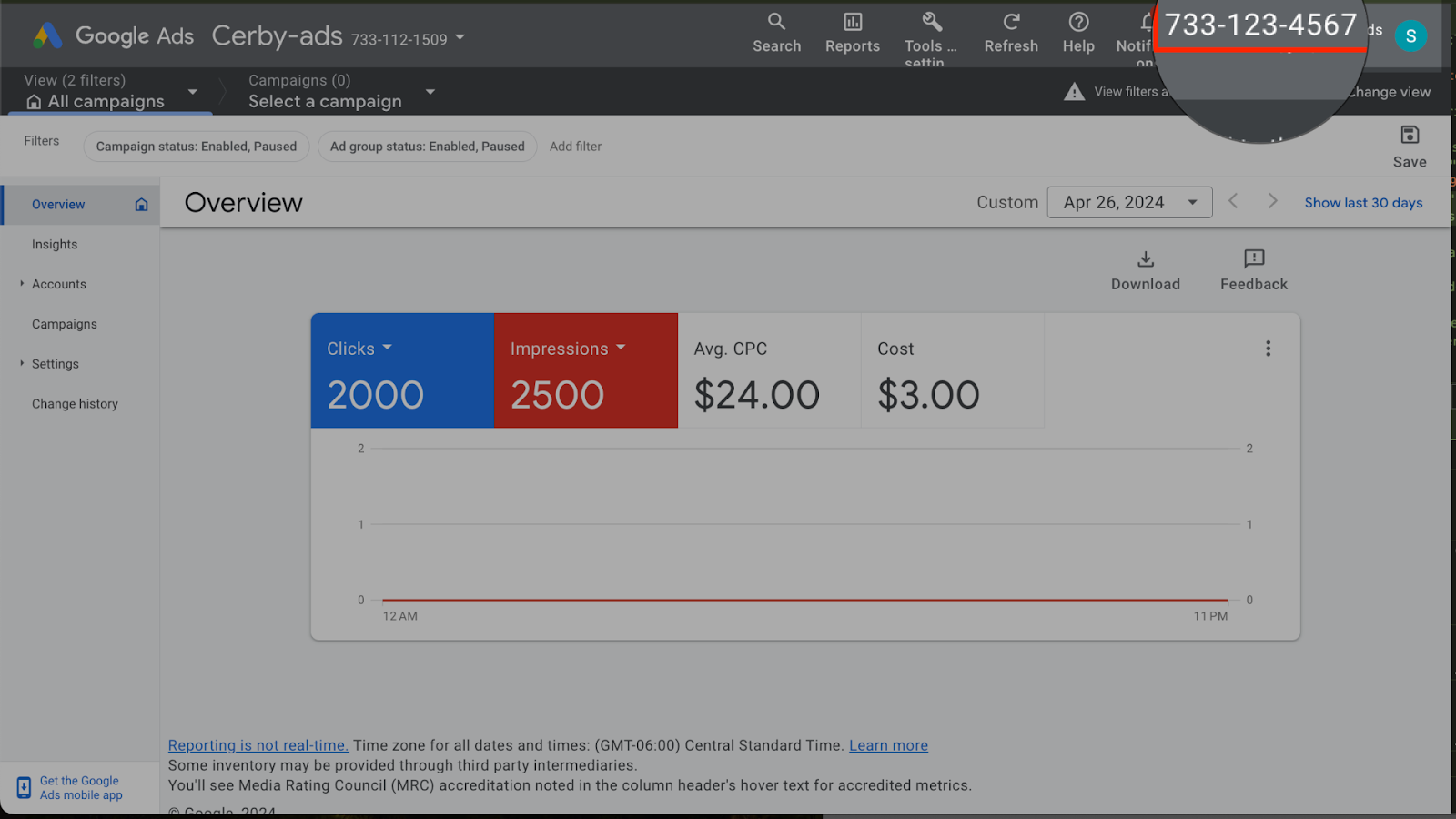
* [**Google Ads Manager**](/setup-and-admin/business-hubs/connecting-your-paid-social-apps/google-marketing-suite/connect-a-business-hub-for-a-google-ads-manager-account.md)**:** The identifier corresponds to the MCC ID, which is the 10-digit number shown in the top-right corner of your Google Ads Manager account, next to your profile, as shown in **Figure 1.**
Figure 1. MCC ID in Google Ads
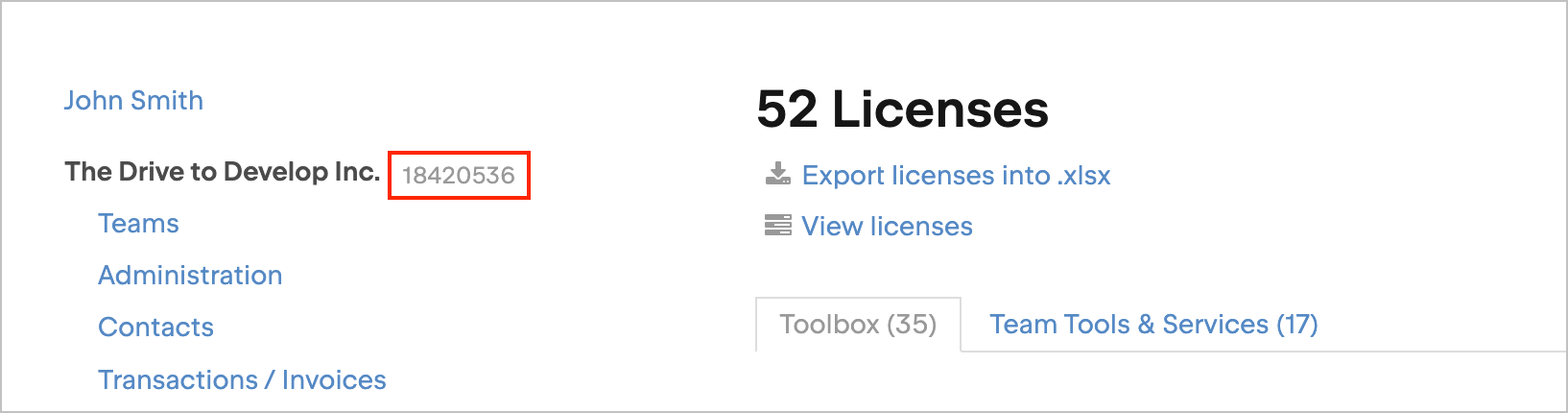
* [**JetBrains**](/setup-and-admin/business-hubs/connecting-your-apps/connect-a-business-hub-for-jetbrains.md)**:** The identifier corresponds to the organization's customer ID, which is the number next to the organization's name, as shown in **Figure 2**.
Figure 2. Customer ID on the JetBrains account page
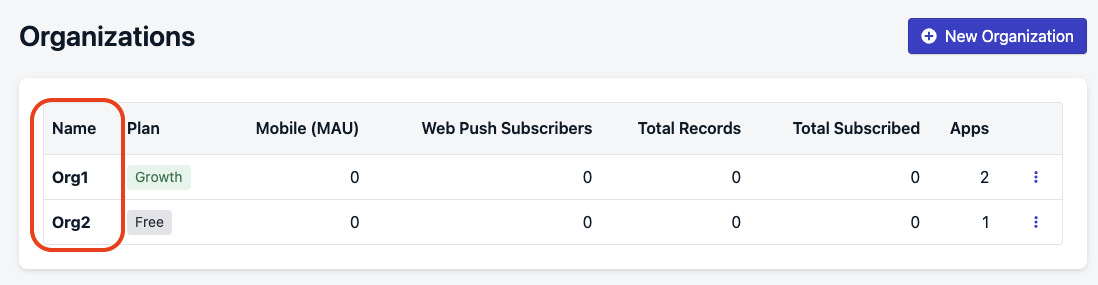
* [**OneSignal**](/setup-and-admin/business-hubs/connecting-your-apps/connect-a-business-hub-for-onesignal.md)**:** The identifier corresponds to the organization name listed in the **Organizations** page, as shown in **Figure 3**.
Figure 3. Organization name in the OneSignal Organizations page
---
# Agent Instructions
This documentation is published with GitBook. GitBook is the documentation platform designed so that both humans and AI agents can read, navigate, and reason over technical content effectively. Learn more at gitbook.com.
## Querying This Documentation
If you need additional information that is not directly available in this page, you can query the documentation by asking a question.
Perform an HTTP GET request on the following URL with the `ask` and `goal` query parameters:
```
GET https://help.cerby.com/setup-and-admin/business-hubs/connecting-your-apps/retrieve-the-business-id-from-your-app.md?ask=&goal=
```
`ask` is the immediate question: it should be specific, self-contained, and written in natural language.
`goal` is what the user is ultimately trying to achieve, the reason they need the answer. Sharing it helps GitBook give you a better, more relevant answer. A goal is most helpful when it describes the outcome the user wants rather than restating the question. For example, with `ask=how do I create an API token`, a goal like `automate deployments from our CI pipeline` lets GitBook tailor the answer to that use case.
The response will contain a direct answer to the question and relevant excerpts and sources from the documentation.
Use this mechanism when the answer is not explicitly present in the current page, you need clarification or additional context, or you want to retrieve related documentation sections.