> For the complete documentation index, see [llms.txt](https://help.cerby.com/llms.txt). Markdown versions of documentation pages are available by appending `.md` to page URLs; this page is available as [Markdown](https://help.cerby.com/setup-and-admin/security-governance/security-hub/view-the-details-of-all-accounts-in-your-workspace.md).
# View the details of all accounts in your workspace
This article describes how to view the details of all accounts in your workspace.
{% hint style="info" %}
**Who can use this feature?**
* Workspace **Owners**, **Super Admins**, and **Admins**
* Only supported using the Cerby web app
{% endhint %}
In Cerby, the **Total accounts** page provides a unified view of all accounts stored in your workspace. It helps workspace **Owners**, **Super Admins**, and **Admins** quickly understand who owns which accounts, whether multi-factor authentication (MFA) is turned on, and when each account was last used.
This visibility is essential for managing access, maintaining security, and identifying unused or improperly configured accounts.
You can use the **Total accounts** page whenever you need to:
* Perform a security review
* Reassign account ownership
* Audit MFA compliance
* Prepare for offboarding or onboarding
* Detect orphaned or risky accounts
* Understand your organization’s actual app-usage footprint
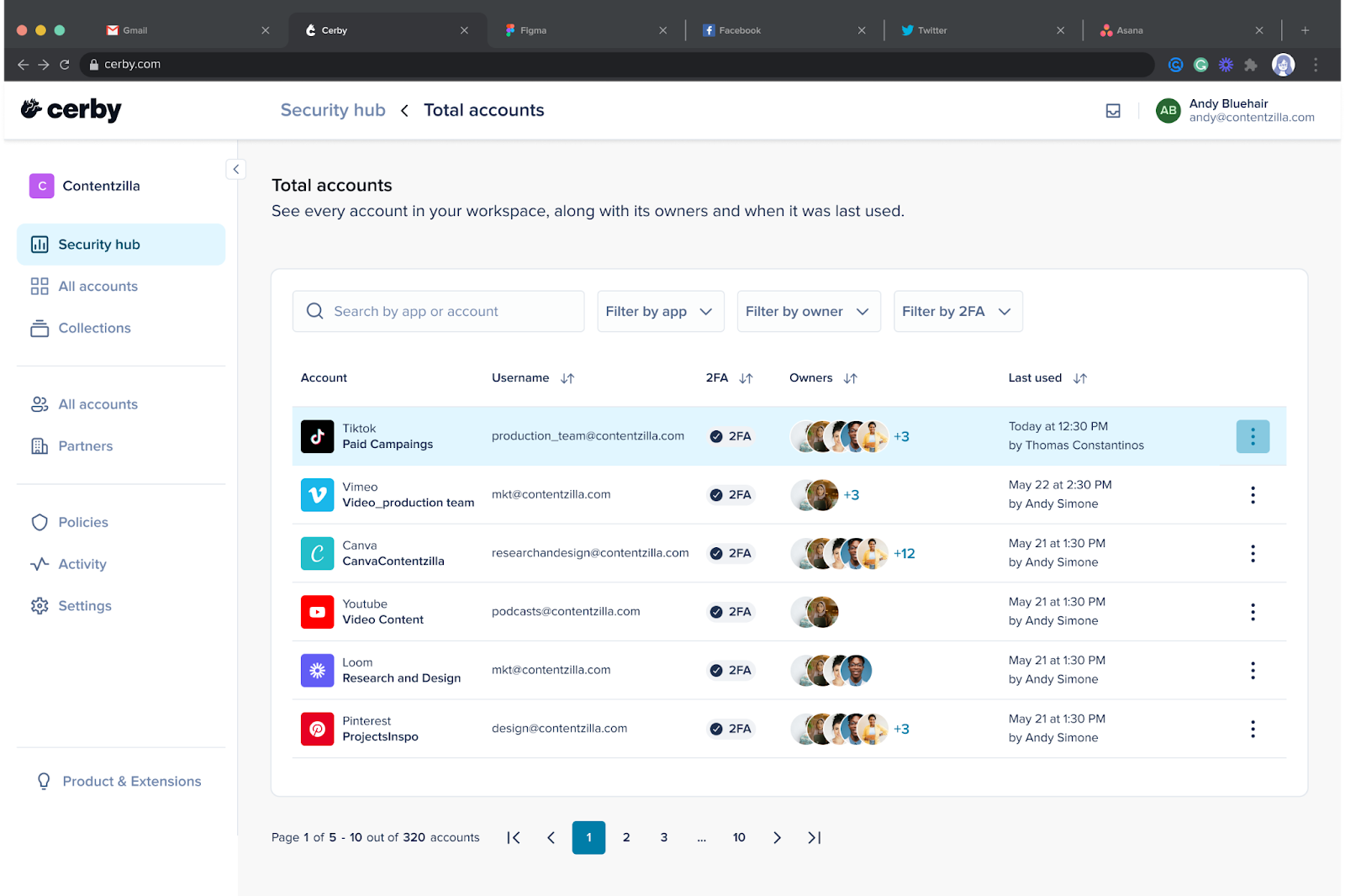
**Figure 1** shows an example of the **Total accounts** page.
Figure 1. The Total accounts page
The following is the information presented in each column of the page:
* **Account:** Lists the application and the account name. The application’s icon and name appear first, followed by the specific account label.
* **Username:** Displays the username or login identifier used for that account, considering that multiple accounts might exist for the same application.
* **MFA:** Shows whether MFA is turned on for the account. The **MFA** chip in this column indicates that Cerby successfully detected MFA.
* **Owners:** Lists the account **Owners** through round user badges with their initials or pictures. An account may have one or several owners.
* **Last used:** Indicates when the account was last accessed and by whom.
***
## Access the Total accounts page
To access the **Total accounts** page, you must complete the following steps:
1. Log in to your [Cerby](https://app.cerby.com/) workspace.
2. Select the **Security Hub** option from the left navigation drawer. The **Security Hub** page is displayed.
3. Click the **See all accounts** option in the **Total workspace accounts** card. The **Total accounts** page is displayed.
Now you are done.
***
## Filter the information displayed on the page
You can filter and search across all accounts to locate the ones you need to manage or review. The following are the available filters:
* **Search by app or account:** Enables you to search accounts or applications by the following criteria:
* Application name
* Account name
* Username
* **Filter by app:** Use this dropdown to show only the accounts belonging to a specific application, such as TikTok, Instagram, and others.
* **Filter by owner:** Filters the accounts by the user who owns them.
* **Filter by MFA:** Narrows down the results on the page by accounts with or without MFA turned on.
***
## See an account’s members and details
As an account **Owner**, you can access the members' list and details of the accounts you own. To do so, you must complete the following steps:
1. Log in to your [Cerby](https://app.cerby.com/) workspace.
2. Select the **Security Hub** option from the left navigation drawer. The **Security Hub** page is displayed.
3. Click the **See all accounts** option in the **Total workspace accounts** card. The **Total accounts** page is displayed.
4. Click the corresponding icon on the right side of the account row:
* **See members** (): It opens the **Users** tab on the account details page, displaying a list of users who have access to the account.
* **Account details** (): It opens the **Settings** tab on the account details page, displaying information about the account.
**NOTE:** If you are not an **Owner** of the account, the **Unable to access account** page is displayed.
Now you are done.
---
# Agent Instructions
This documentation is published with GitBook. GitBook is the documentation platform designed so that both humans and AI agents can read, navigate, and reason over technical content effectively. Learn more at gitbook.com.
## Querying This Documentation
If you need additional information that is not directly available in this page, you can query the documentation by asking a question.
Perform an HTTP GET request on the following URL with the `ask` and `goal` query parameters:
```
GET https://help.cerby.com/setup-and-admin/security-governance/security-hub/view-the-details-of-all-accounts-in-your-workspace.md?ask=&goal=
```
`ask` is the immediate question: it should be specific, self-contained, and written in natural language.
`goal` is what the user is ultimately trying to achieve, the reason they need the answer. Sharing it helps GitBook give you a better, more relevant answer. A goal is most helpful when it describes the outcome the user wants rather than restating the question. For example, with `ask=how do I create an API token`, a goal like `automate deployments from our CI pipeline` lets GitBook tailor the answer to that use case.
The response will contain a direct answer to the question and relevant excerpts and sources from the documentation.
Use this mechanism when the answer is not explicitly present in the current page, you need clarification or additional context, or you want to retrieve related documentation sections.